
Nasper-backed fintech firm PayU has started talks to acquire domestic payment gateway major BillDesk, and the deal size could be in the range of $3-4 billion, sources in the know said. "BillDesk has been open to being acquired for some time now, but in the past the valuations that the company was seeking proved to be a hurdle," said a source. "Three years ago too, PayU had approached BillDesk for an acquisition, but things didn't go ahead due to high valuations. "BillDesk had asked for $2-billion value then," said the source.

The turmoil, if you read the headlines, is about the so-called funding winter. Deep down, though, the question is one of the common direction in which founders and investors need to pull, points out Suveen Sinha.

'In the business of money, where you are regulated, the liability lies on the head of the acquirer.' 'It is not a good thing when you cannot spot the risks.'

Google is going ahead with a policy revision mandating 30% charge on in-app purchases across all apps on Play Store. This has left developers' community worried about tighter squeeze on their earnings, says Yuvraj Malik.

Since its launch in April, helpline 155260 has been able to prevent more than Rs 18.5 million of defrauded money from reaching the hands of fraudsters.

The government will develop a mechanism to ensure that e-commerce companies and entities that have adopted Open Network for Digital Commerce (ONDC) architecture are compliant with the rules. Non-compliance may result in a penalty. "We will have our own evaluation system, and if we find any player is not sticking to it, then we will take action. "Participants will have to be compliant with the rule of the land," Sanjiv, joint secretary at the Department for Promotion of Industry and Internal Trade (DPIIT), told reporters on Thursday.

Fintech unicorn Razorpay has raised $375 million in the Series F round of funding at a $7.5-billion valuation, making it India's second-most valuable start-up in this space, after Paytm. The company valuation has surged over seven times in 15 months, helping it push Walmart-owned digital payments firm PhonePe to the third spot on the country's most-valuable fintech list. Razorpay's latest round of fundraising was led by Lone Pine Capital, Alkeon Capital, and TCV.

The Central Consumer Protection Authority (CCPA) has imposed a penalty of Rs 1 lakh on e-commerce major Amazon for selling pressure cookers that did not meet quality standards. The CCPA also directed Amazon to notify the consumers of all these 2,265 pressure cookers sold through its platform, recall the products and reimburse the prices to buyers, the Department of Consumer Affairs said in a statement.

While payments banks surely lose money, their operating ratios were looking better in 2017-18 compared to the year before. This implies that as customer volumes start picking up, the business models may perk up too, says R Jagannathan.

Auditors seem to have developed a heightened sense of risk and are not content to tick the boxes and sign the papers.

The most important step is delivering what is needed -- a fairer IPO pricing, notes Debashis Basu.

The sharp rally in the broader markets has propelled India's market capitalisation (m-cap) to a new high. The combined m-cap of all BSE-listed firms rose to Rs 291.9 trillion in intraday trade on Thursday before settling lower at Rs 290.9 trillion. The previous record was on December 14, 2022, at Rs 291.3 trillion.

In the excitement over the allocation of bank licences for the private sector, a new category of licence offered by the Reserve Bank of India (RBI) last year went almost unnoticed. That was when the RBI consolidated the rules for prepaid payment instruments (PPI), popularly understood as e-wallets or gift cards. In the process, the regulator has fast-forwarded a bottom-up card usage industry in India that is completely different from the world of bank-linked credit and debit cards.

The BCCI on Friday said it will review IPL's sponsorship deals, including the one with Chinese mobile manufacturing company Vivo, in a meeting next week after 20 Indian soldiers were killed during a clash with Chinese troops in eastern Ladakh. The meeting of the IPL Governing Council will review the yearly Rs 440 crore title sponsorship deal with Vivo among others.

While players like Paytm, MobiKwik, and PhonePe allow you to buy gold for Rs 1, Amazon Pay has kept the minimum amount at Rs 5. Digital gold is essentially an avenue for investing in physical gold.

Uber India has readied itself for another $500 million (Rs 3,300 crore) investment in the next three months.

The government is planning to extend the electronic modes of tax payment to its own payments platform, Unified Payments Interface (UPI), credit cards of banks, or even a mobile wallet like Paytm.

In January, Visa's chief executive officer, Al Kelly, said during an earnings call that "there's been a burst of the balloon in valuations in the fintech world". Noting that the trend of lower valuations "is a helpful characteristic of the current environment", he added: "We will look for capabilities and management teams that will bring more value to Visa than we can bring ourselves." Data from KPMG's Pulse of Fintech H2'22 shows that global fintech investment - via mergers and acquisitions (M&As), private equity (PE) and venture capital (VC) firms - at $164.1 billion in 2022, was down 31 per cent over the year before. Indian fintechs held up better during this timeframe, attracting $6 billion, or a fall of 24 per cent.

Facebook-owned messaging service WhatsApp has secured regulatory approval for launching its digital payment platform -- WhatApp Pay -- in a phased manner, close to two years after the US-based company's pilot run.

'Indices will remain range bound in 2022 as earnings catch up with the current multiples.'

A total of 49 companies raised Rs 81,615 crore in Samvat 2077, more than the preceding four years and almost double the amount raised in the previous year. Samvat 2078 appears even more promising with mega issues of Paytm and Life Insurance Corporation (LIC) of India. However, Paytm's record could be short-lived as state-owned LIC is planning to launch a Rs 1-trillion IPO by March 2022.
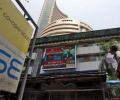
Analysts believe that investors should look at stocks that hit 52-week lows only if they have a dividend paying track record, are debt-free and have sound fundamentals.

The Securities and Exchange Board of India (Sebi) has cleared the draft red herring prospectus (DRHP) of the state-owned Life Insurance Corporation of India (LIC). According to investment banking sources, the so-called final observations were issued by the market regulator on Tuesday evening. Following the market regulator's nod to the IPO papers, the insurer can launch its share sale. However, LIC may not launch its IPO immediately given the current volatile market conditions.

Paytm recently partnered with 1,000 educational institutions over admission fee payment through the app.

With the stock market turning choppy, fintech start-up MobiKwik, which had filed a draft red herring prospectus (DRHP) to raise around $250 million through an initial public offering (IPO), is now looking to raise money from the private market. "We will raise private money but we are not in dire need. "The business was profitable for the first time in the December quarter on a top line of around Rs 150 crore and that will be maintained in the March quarter also. We are generating cash," said Upasana Taku, co-founder of MobiKwik.
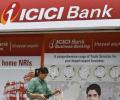
This is the second instance of mainstream banks blocking services to new-age digital payments companies.

Since the first Aadhaar number was issued in September 2010, more than 1.33 billion Aadhaar cards have been generated till June 2022. With the Aadhaar enrolment of adult Indians nearing 100 per cent, the main objective of the Unique Identity Authority of India (UIDAI), which was to give Unique Identification numbers (UID) to all residents of India, is almost achieved, said a senior government official. "Enrolment will now be much more update-based, because people keep updating their mobile numbers and addresses.

Zomato shares may see limited upside in the near-term amid news-flow around government-backed ONDC expanding its footprint in the delivery market, believe analysts. Zomato shares have dropped 4 per cent in three days on the BSE. By comparison, the benchmark S&P BSE Sensex has added 0.2 per cent.

Everyday consumerables, such as grocery and order-in food items are the key buyout sector, analysts say, and a major reason for kirana stores' digitisation push.

E-commerce platform Snapdeal has filed preliminary documents with markets regulator Sebi to raise funds through an initial public offer (IPO), joining the league of internet-led businesses looking to list on domestic stock exchanges. The public issue comprises fresh issuance of equity shares worth Rs 1,250 crore and an offer for sale (OFS) of 3.07 crore equity shares, according to the draft red herring prospectus (DRHP). According to market sources, potential listing could value Snapdeal at about $1.5-1.7 billion.

'For the next three months or so, the market will go down.' 'Traders do not have Rs 100 notes.'

Indian startups have raised $42 billion in 2021, up from $11.5 billion in the previous year, a report by Orios Venture Partners said. The report titled 'The Indian Tech Unicorn Report 2021' said India saw 46 unicorns (companies with $1 billion valuations) in 2021 alone, more than doubling the total number of unicorns to 90. These include ShareChat, Cred, Meesho, Nazara, Moglix, MPL, Grofers (now Blinkit), upGrad, Mamaearth, GlobalBees, Acko, Spinny and others. India - with 90 unicorns - is the third-largest unicorn hub behind the US (487) and China (301), and ahead of the UK (39).
According to experts, this will have major impact on new investments by Chinese players in companies, such as Paytm, Ola, BigBasket, Byju's, Dream11, MakeMyTrip, and Swiggy, when they go for follow-up funding. Chinese investors, such as Alibaba, Tencent, and Xiaomi, are active in the Indian start-up space, and have collectively invested billions of dollars.

Investors need to evaluate the offerings of a broker in totality before selecting one.

From offering office premises that can be converted into isolation wards to earmarking funds to be used for procuring kits, ventilators as well as personal protective equipment for health care workers, India Inc has put a united front to combat the unprecedented crisis facing the country.
Foreign portfolio investors (FPIs) and mutual funds (MFs) have put in more money as anchor investors in initial public offerings (IPOs) in 2021 than any other year. FPIs' share of investments for the year stood at Rs 24,477 crore, nearly six times that put in last year and more than nine times the amount invested in 2019, the data from Prime Database showed. MFs have invested Rs 12,264 crore, four times than that invested last year and more than 10 times the investment in 2019. The total investment by FPIs and MFs put together this year is five times the amount invested last year. The amount contributed by MFs, however, is nearly half of that invested by FPIs.

Initial public offerings (IPOs) by start-ups are bringing cheer to investors and investment bankers alike. After food delivery company Zomato, Nykaa has issued the fattest pay cheque to the managers of its share sale -- Rs 148 crore, or 2.8 per cent of its issue proceeds of Rs 5,300 crore. In absolute terms, this is the second-highest amount paid to investment bankers for handling an IPO, while in percentage terms, it is the highest for large IPOs (>$300 million) in the last one year, shows an analysis of the data provided by Prime Database, a primary market tracker.

Fintech firm MobiKwik on Monday filed a draft red herring prospectus (DRHP) with the markets regulator, Securities and Exchange Board of India (Sebi), for its initial public offering (IPO). According to its DRHP, the company plans to raise Rs 1,900 crore, which includes a fresh issue of Rs 1,500 crore and an offer for sale of Rs 400 crore. The selling shareholders include American Express Travel, Bajaj Finance, Cisco Systems and Sequoia Capital India, besides founder Bipin Preet Singh. MobiKwik is the latest among tech majors wanting to list on stock exchanges. Food delivery start-up Zomato will launch its IPO on Wednesday.
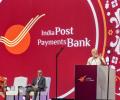
Key questions remain about the operational and financial viability of a completely paperless bank such as India Post, says Mayank Jain.

Vijay Shekhar Sharma, head of Paytm, says they'd achieve their 500-million user target by 2018, two years before the earlier aim.
